Guides
Used Cars in Germany: Advantages for Italian Buyers
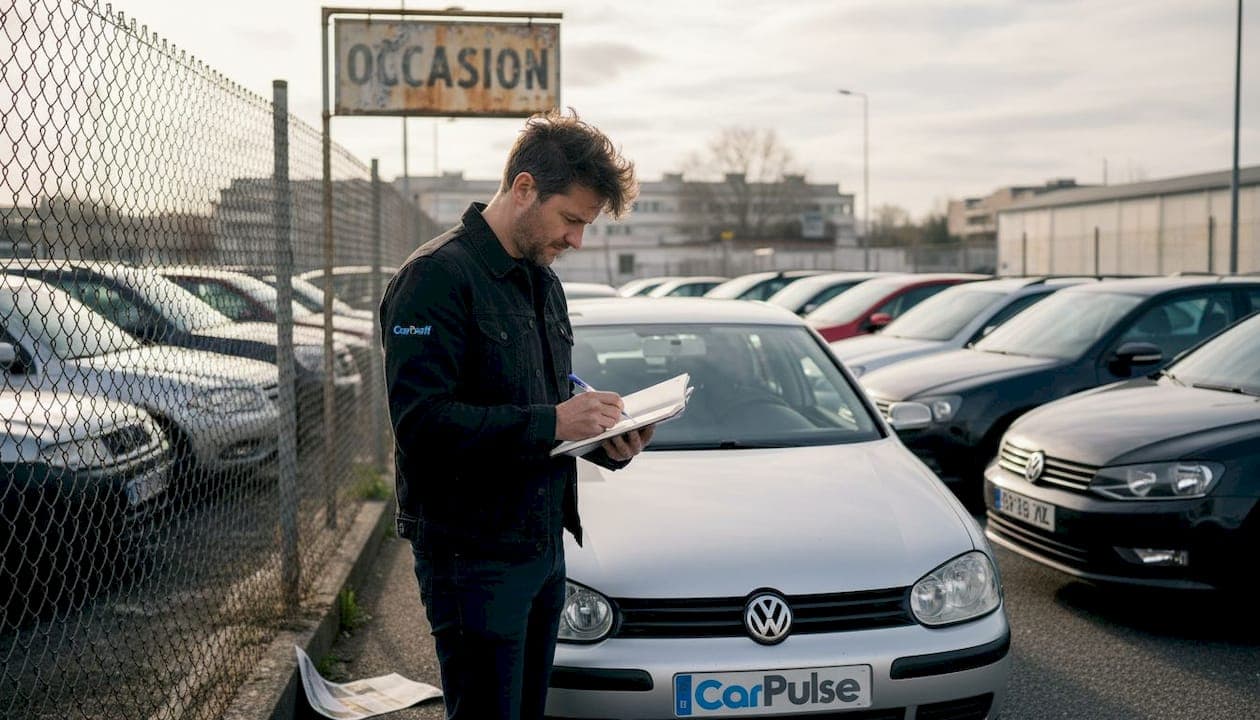
Used Cars in Germany: Advantages for Italian Buyers
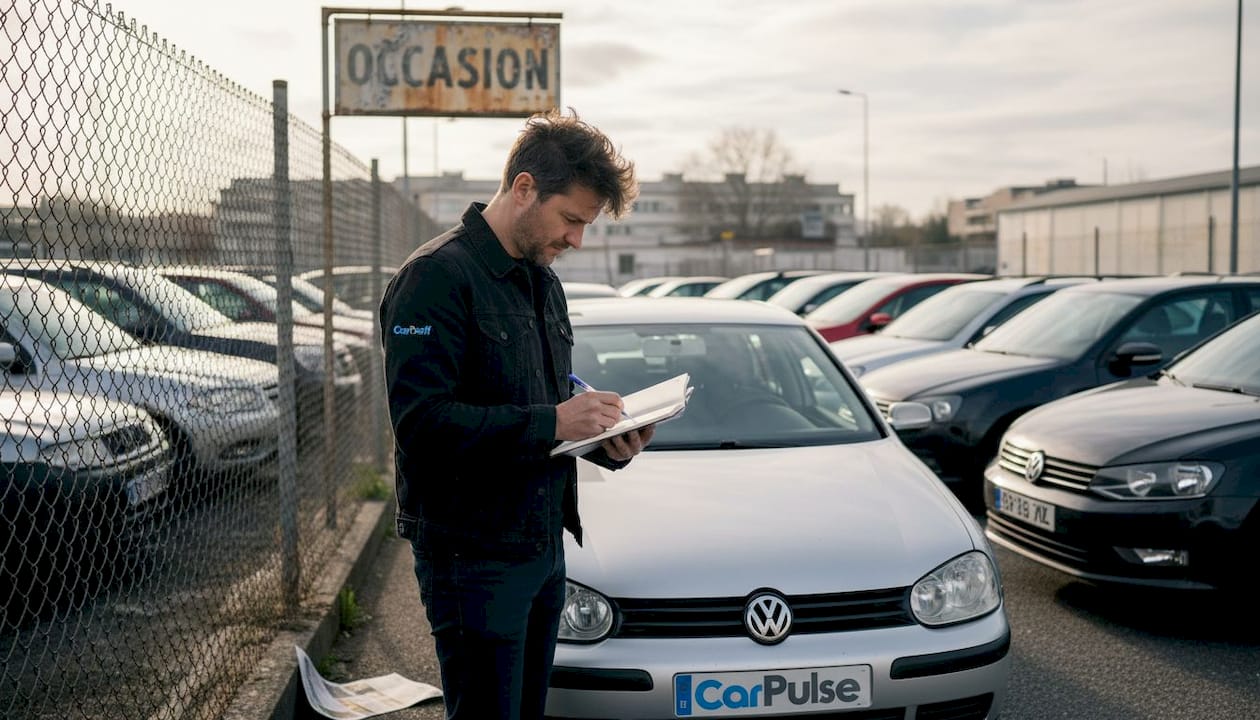
Summary:
- Germany has the largest used car market in Europe with over 7 million transactions annually. Prices are on average 15–25% lower than in Italy, particularly for premium brands like BMW, Mercedes, Audi, and Volkswagen — all widely available with certified mileage and fully documented service history.
- The Hauptuntersuchung (HU), Germany's mandatory biennial technical inspection conducted by independent bodies like TÜV and DEKRA, serves as a powerful quality filter. A recent HU certificate with no faults significantly reduces the risk of hidden mechanical issues.
- CarPulse is the pan-European used car marketplace with 24,000+ verified listings, AI price valuation, and vehicle history included — the ideal starting point for benchmarking German offers against the Italian and Balkan markets before you act.
If you're looking for a used car in 2026, Germany should be the first item on your shortlist. This isn't a trend: the German used car market is structurally the largest and most transparent in Europe, powered by a deep automotive culture, a very high corporate fleet turnover, and technical standards that are unmatched on the continent. For an Italian buyer, the geographic proximity — Northern Italy is just 3–4 hours by motorway from Munich or Stuttgart — makes this a concrete and accessible opportunity, even without professional intermediaries. This guide explains why it works, where to look, how to protect yourself from risks, and what the complete process looks like for bringing a German car back to Italy.
Why the German Market Benefits Italian Buyers
Germany registers between 2.8 and 3.2 million new vehicles every year, feeding a used car market built on high volumes and high transparency. The advantages for Italian buyers are structural and self-reinforcing:
Structurally lower prices. For the same model, year, and mileage, a used car in Germany costs on average 15–25% less than the equivalent listing in Italy. The gap is most pronounced for German premium brands — BMW, Mercedes-Benz, Audi, Volkswagen, Porsche — because in Italy they're sold with an "import premium" that simply doesn't exist in Germany. A 2021 BMW 3 Series with 60,000 km that asks €28,000–32,000 in Italy is routinely found between €22,000 and €26,000 in Germany.
High-quality corporate fleet vehicles. Germany is home to thousands of large multinationals that renew their fleets every 2–4 years. This creates a continuous flow of relatively young cars (2–5 years old) with full specifications, certified mileage, and service records stamped at official dealerships.
The Hauptuntersuchung as a shield. The HU is the mandatory biennial technical inspection, carried out by independent bodies (TÜV, DEKRA, GTÜ). The outcome cannot be negotiated. A recent HU — especially "ohne Mängel" (without faults) — means the vehicle passed rigorous independent checks of brakes, lighting, bodywork, and undercarriage.
Impeccable documentation. Germans are known for keeping vehicle documents in order: the service booklet (Scheckheft) with dealer stamps, HU inspection reports, and repair invoices. Finding a car with a complete, verifiable history — rare in Italy — is the norm in Germany.
Where to Search and What to Expect
The German market is accessible primarily through online portals, physical dealerships (Autohäuser), and corporate fleet auctions. For first-time Italian buyers, online portals are the safest and most transparent entry point.
Mobile.de and AutoScout24.de are the two main aggregators. Both allow filtering by region, vehicle condition, seller type (private or dealer), and HU status. Before contacting any seller, benchmark the asking price against market data: use CarPulse's advanced search to get a quick European reference and determine whether you're looking at a genuinely good deal.
Geographically, certain regions offer particular opportunities:
- Bavaria (Munich, Nuremberg, Augsburg): highest concentration of BMW, Audi, and Porsche, often with BMW fleet-certified mileage. Prices slightly above the German average, but quality is superior.
- Baden-Württemberg (Stuttgart, Mannheim, Karlsruhe): the heart of Mercedes and Porsche, a constant flow of executive vehicles decommissioned from corporate fleets.
- North Rhine-Westphalia (Cologne, Düsseldorf, Dortmund): Germany's most populated state, maximum variety of supply at prices more accessible than the south.
- Eastern Germany (Leipzig, Dresden, Berlin): prices on average 5–10% lower than the west; the market is now just as reliable as its western counterpart.
Average Prices and the Most Attractive Segments
These are the realistic price ranges you can expect in 2026 for the segments most sought after by Italian buyers:
- Volkswagen Golf (2020–2023, 40,000–80,000 km): €14,000–21,000. The same car in Italy often reaches €18,000–25,000.
- BMW 3 Series / 5 Series (2019–2022, 50,000–100,000 km): €20,000–38,000. In Italy the same range is €28,000–46,000, with a gap exceeding €10,000 on M Sport versions.
- Mercedes C-Class / E-Class (2019–2022): €21,000–42,000. Often with optional packages that in Italy are sold as paid extras.
- Volkswagen ID.4 / Skoda Enyaq (EV, 2021–2023): €18,000–28,000. The German used EV market is mature; prices reflect actual depreciation rather than the inflated levels seen in Italy.
- Audi A4 / A6 (2019–2022, 50,000–90,000 km): €19,000–36,000. Often ex-fleet with certified Audi Service history.
Before making any offer, always check the AI valuation on CarPulse Valuation: the algorithm analyzes 24,000+ European listings and tells you in real time whether a price is fair, high, or a genuine bargain.
The Import and Registration Process in Italy
Buying in Germany is the easy part. Getting the car registered in Italy requires precision, but the process is well-established. Here are the steps in the correct sequence:
- Purchase contract (Kaufvertrag). Have the seller prepare a written contract with all vehicle details, parties involved, and the agreed price. If buying from a private seller, make sure both parties sign it.
- Certificate of Conformity (COC). This European document is essential for vehicle homologation in Italy without repeating technical tests. If the seller doesn't have it, you can order it directly from the manufacturer using the VIN, for a cost of €30–150 depending on the brand.
- Export plates (Ausfuhrkennzeichen). If the vehicle doesn't have valid German plates, request temporary export plates from the local registration office (Kfz-Zulassungsstelle). These are valid for a limited period — usually a few days to one month — and allow you to legally drive the vehicle to Italy.
- Arrival in Italy and VAT. If buying from a private German seller, there's no VAT to handle. If buying from a dealer, German VAT (19%) is usually included in the price. You may be able to claim a refund and pay Italian VAT (22%) instead — the net difference is small; consult a tax advisor or the ACI desk for your specific case.
- Sportello Telematico dell'Automobilista (STA). Present the vehicle at a STA desk with: Kaufvertrag, COC, identity document, tax code (codice fiscale), and payment of the IPT (Provincial Transcription Tax). The IPT amount varies by province and vehicle power output.
- Italian periodic inspection. If the vehicle is more than 4 years old, it must undergo the standard Italian technical inspection. With a valid COC, the process is streamlined.
- Italian plates. Once the process is complete, you receive Italian plates and an updated registration certificate. The full process typically takes 2–6 weeks depending on local STA timing.
Total import costs to budget for: fuel or transport (€300–600), COC (€30–150), export plates (€50–80), IPT (€150–400), Italian insurance and road tax. Total import costs typically amount to €600–1,200 for a private-to-private transaction.
Risks to Avoid and Red Flags to Recognize
The German market is highly transparent but not risk-free. Here are the situations that should raise a warning flag:
- Odometer tampering: always check the mileage on historical HU inspection reports — if there's an unexplained jump between two inspections, there's a problem. Databases like CARFAX.de or fahrzeuggeschichte.de allow history checks by VIN.
- Outstanding finance: verify with the seller that the vehicle is "schuldenfrei" (free from debt or outstanding finance). Ask for written confirmation from the financing bank if needed.
- Long-expired HU: an HU expired for more than 12 months tells you nothing about the vehicle's current state. Pay for an independent TÜV/DEKRA inspection (€50–80) before committing — it's minimal cost compared to the risks.
- Suspicious online sellers: avoid listings with poor photos, prices well below market average, or sellers who push for an upfront bank transfer without allowing an inspection.
- Right-hand drive vehicles: Germany doesn't have them, but if you're comparing offers across multiple European markets, remember that UK vehicles require specific homologation in Italy.
Pre-Purchase Checklist: What to Bring and What to Verify
- VIN → run a history check online (CARFAX.de, fahrzeuggeschichte.de)
- Check the date and result of the most recent HU in the service booklet
- Request historical HU inspection reports to verify mileage progression
- Check the Scheckheft (service booklet) for oil changes and scheduled servicing
- Confirm the COC is available or order it before closing the deal
- Verify the seller can issue a proper Kaufvertrag
- If buying from a private seller, bring a trusted mechanic or book an independent TÜV inspection
- Arrange Italian temporary insurance before the return drive
If you're planning to resell the car you bought in Germany, list it on CarPulse and reach buyers across Europe. The platform offers free listings for cars under €10,000, seller verification, and AI valuation — all included.
FAQ — Frequently Asked Questions
Is buying a used car in Germany genuinely cheaper than buying in Italy?
Yes, in most cases the savings are real and meaningful. For German premium brands (BMW, Mercedes, Audi), the price differential averages 15–25%; for more common brands it ranges between 10–20%. You need to factor in import costs (€600–1,200): if the savings exceed that figure — which they usually do for mid-range and premium vehicles — the operation makes clear financial sense.
What is the Hauptuntersuchung and how does it affect the buying decision?
The Hauptuntersuchung (HU) is Germany's mandatory biennial technical inspection, carried out by independent bodies such as TÜV, DEKRA, or GTÜ. The outcome is non-negotiable. A recent HU "ohne Mängel" (without faults) means the vehicle passed rigorous, impartial checks on brakes, lights, bodywork, and undercarriage. It doesn't replace a thorough mechanical inspection, but it's one of the most reliable indicators of a vehicle's technical condition available anywhere in Europe.
Do I need a COC to register a German car in Italy?
Yes, the Certificate of Conformity (COC) is practically essential for homologating a European vehicle in Italy without repeating costly technical tests. If the seller doesn't have one, you can order it directly from the manufacturer using the VIN — costs range from €30 to €150 depending on the brand. Never close a deal without confirming the COC is available or can be obtained.
How can I verify the history of a German used car before buying?
Several ways: CARFAX.de and fahrzeuggeschichte.de offer VIN-based history reports at a moderate cost. Also review the historical HU inspection reports (which record mileage at each inspection) and the Scheckheft service booklet. If in doubt, pay for an independent TÜV/DEKRA or ADAC inspection (€50–80) — it's the smartest investment you can make before signing anything.
Conclusion: Is Germany Still the Right Destination in 2026?
The answer is yes, with the right precautions. The German used car market retains all the structural advantages that have made it attractive for Italian buyers for decades: lower prices, superior vehicle quality, impeccable documentation, and a technical inspection system — the Hauptuntersuchung — that has no equal in Europe. Geographic proximity eliminates most logistical barriers, and the bureaucratic process, while requiring attention, is standardized and well-documented.
The critical piece remains the search and valuation phase: finding the right vehicle at the right price requires a reliable European benchmark. Use CarPulse as your reference platform to compare German offers against the Italian and Balkan markets, receive an objective AI valuation, and — when you're ready — buy or sell with complete confidence. With 24,000+ verified listings and an active pan-European presence, CarPulse is the smartest starting point for any cross-border purchase.