Guides
How to Negotiate a Used Car Price: 7 Tactics That Work
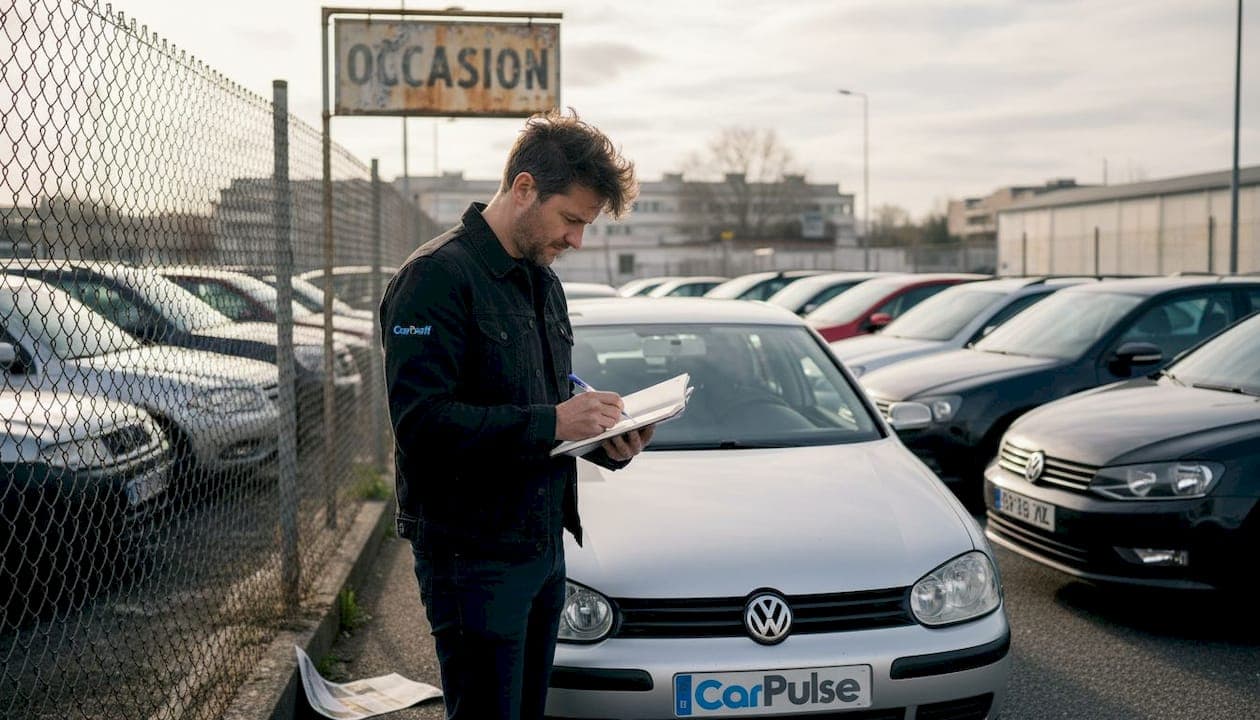
How to Negotiate the Price of a Used Car: 7 Tactics That Work
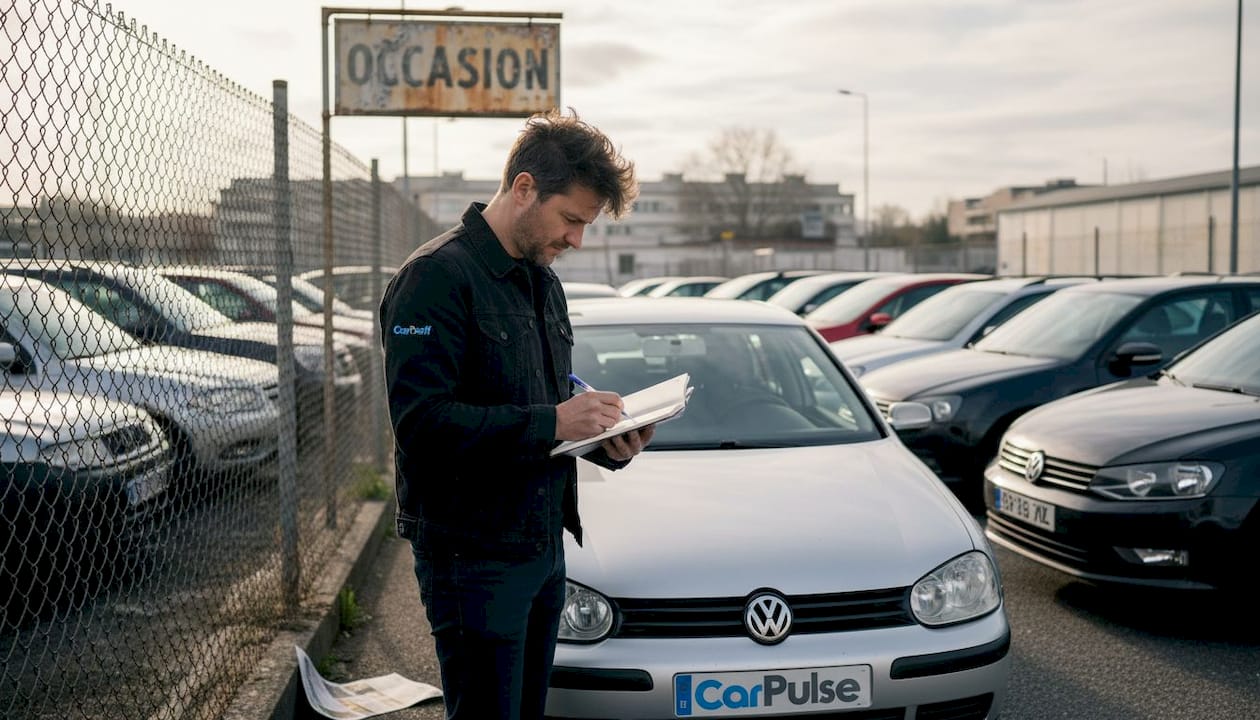
Summary:
- Before saying a word about price, do your homework: knowing the real market value of a car means you've already won half the negotiation before it starts.
- Defects aren't awkward — they're concrete leverage: every verifiable problem is worth a price reduction, not just a complaint to make.
- With private sellers you negotiate on price; with dealerships, when the list price is firm, you negotiate on extras, warranty, and trade-in.
Buying a used car is not a popularity contest: it's a financial transaction, and the asking price is almost always negotiable. Yet most buyers arrive unprepared — without checking market value, without identifying defects, without any strategy. The result: they overpay, often for cars that could have cost 10–20% less with a little groundwork. This guide gives you the concrete tools to negotiate effectively: from preliminary valuation to negotiation techniques, from the right levers to the mistakes to avoid — both with private sellers and with dealerships. If you're still searching for the right car to practise on, browse used cars available on CarPulse with filters by model, year, and price.
Preparing Before the Appointment
Negotiation is won or lost before you ever meet the seller. The informed buyer holds a structural advantage: they know what the car is genuinely worth, they're familiar with the model's typical weaknesses, and they can contextualise every concession the seller is willing to make.
Verify market value. The first step is understanding what that specific car is actually worth right now. Compare at least five similar listings for the same year, engine, mileage, and trim level. Use online valuation tools — you can do this directly with the free market value estimate on CarPulse — for an independent reference. If the listing is priced 15% or more above the market average, you already have a lever: you're not making a low offer, the seller has simply overpriced the car.
Research the specific model. Every car has known weak points: a troublesome automated gearbox, a timing chain that stretches, a particulate filter that clogs on urban driving. Knowing these in advance lets you inspect them carefully during your visit and argue for discounts in technical, not emotional, terms. A buyer who says "I've read that the dual-clutch gearbox on this model tends to develop hesitation at higher mileage — can I verify that?" signals competence and shifts the dynamic of the conversation.
Set your hard ceiling. Before you leave home, decide the absolute maximum you'll spend — and never reveal it during negotiation. Having a firm limit in your head protects you from the "I've already come all this way and I want to close" feeling. That feeling is the seller's best ally.
Gather supporting documentation. Screenshots of comparable listings at lower prices are tangible arguments: present them without aggression, as market data, not as provocations.
Inspection: Turning Defects Into Leverage
Your visit to the car is not a courtesy call: it's the phase where you collect information you'll use in negotiation. Every verifiable defect is potential leverage — but only if you can quantify its repair cost.
Bodywork and paint. Deep scratches, dents, panels that don't align properly, or mismatched paint tones between adjacent doors indicate post-accident repairs. Request repair estimates — even rough ones — and subtract them from the asking price. Immaculate bodywork is the seller's argument; bodywork with three obvious scratches and a badly repainted bumper is yours.
Tyres and brakes. Measure the remaining tread depth: below 3 mm, replacement is imminent. Four new tyres on an average car cost between €300 and €600 fitted — a real, citable number. Check the front brake discs through the wheel arch: deep grooves or warping signal near-term replacement.
Interior and electronics. Stained seats, scratched plastic, noisy air conditioning, parking sensors that don't respond — note every defective element. Don't deploy them as a shopping list of complaints during negotiation; keep them ready for the final phase when the seller asks for your number.
OBD diagnosis. If possible, bring an OBD reader and scan for stored fault codes. Recently cleared codes — identifiable by the absence of freeze frame data — can indicate concealed faults. A trusted mechanic can do this check in minutes and give you a written report, which is invaluable in negotiation.
Propose an independent inspection. For a car of significant value (above €8,000–€10,000), requesting an independent mechanic's inspection is normal and professional. A seller who categorically refuses this request is telling you something very important about the car.
The 7 Negotiation Tactics
Once you've completed the inspection and have the market value in mind, it's time to negotiate. These seven tactics apply to both private sellers and dealerships, with the relevant adjustments.
1. Don't make the first offer, if you can avoid it. Ask the seller what their "best price" is before you state yours. Many people, under pressure from this simple question, spontaneously lower the price by several hundred euros without you having said anything. You've obtained a concession for free.
2. Make an offer with a precise figure. Saying "I'll offer €8,500" is less effective than "I'll offer €8,350". The precise figure conveys the idea that you've done a specific calculation based on real data, not that you've picked a round number.
3. Anchor low. The first number you say becomes the anchor for the negotiation. If the asking price is €10,000 and your reasonable offer is €9,000, open at €8,200–€8,500. The natural midpoint will be closer to €9,000 than to €10,000.
4. Use silence as a tool. After making your offer, add nothing. Silence creates discomfort, and almost always it's the seller who breaks it — often by dropping the price. Whoever speaks first after your offer tends to lose ground.
5. Tie every concession to a specific reason. "I'm asking for €600 off because I got three quotes for the tyres and they range from €380 to €520" is far stronger than "I'd like to pay a bit less". The seller can't dispute verifiable market data; they can only decide whether to accept it or not.
6. The "closing alternative" technique. If the negotiation is close but not closing, offer two options: "I can close today at €8,800 with immediate payment, or Friday at €9,000 if that timing suits you better." The seller focuses on choosing between two options rather than reopening the entire discussion; often the deal closes right there.
7. Be prepared to walk away. This isn't aggression — it's a demonstration that you have an alternative. If negotiation stalls over a gap that won't close, say you'll think it over and have other cars to look at. Many sellers get in touch within 24–48 hours with an improved offer.
Private Seller vs Dealership: Different Strategies
The negotiation logic changes significantly depending on who you're buying from. Dealing with a private seller is different from dealing with a dealership, and confusing the two consistently produces poor results.
Buying from a private seller. The private seller has one car to sell and an emotional horizon: they've lived with it, they're attached to it. The negotiation with a private seller is almost always on the net price. The most effective levers are immediate payment, documented defects, and comparison with similar listings. Avoid excessive criticism of the car — the private seller takes it personally and shuts down. Acknowledge the car's strengths, and be surgical about the defects you bring to the table.
Buying from a dealership. Dealerships have structured margins and sales staff often have limited authority to drop below a threshold without management sign-off. If the price is "fixed", move the negotiation to ancillary elements: extended warranty, included service, a favourable trade-in valuation for your current car. Trade-ins are often the most fertile ground: the dealership can "raise" the recognised value of your car rather than lower the asking price of the car they're selling, achieving the same economic outcome with less friction. To know your own car's value before entering trade-in negotiations, use CarPulse's free valuation tool.
Timing and Psychological Levers
Beyond the technical levers tied to the car itself, there are contextual variables you can exploit to improve your negotiating position.
Time of year. The used car market has real seasonality. The autumn and winter months (October–February) are historically quieter: demand drops, sellers are more patient but also more willing to close on concrete offers. Spring and early summer are more competitive. If you can plan your purchase for autumn, you'll generally have more negotiating power.
Time on market. A listing that has been live for 30, 60, or 90 days without a price reduction signals a seller who hasn't found buyers at the asking price. Ask how long the car has been for sale — it's a legitimate question — and use the answer to calibrate your opening offer.
Immediate payment. The certainty of immediate collection is a real advantage for any seller. If you can pay the same day — or within 24–48 hours by bank transfer — say so clearly. It's not showing off: it's a concrete lever that many sellers value highly.
The motivated seller. A private seller who has already taken on financial commitments or is moving abroad is under pressure to close. These details often emerge during preliminary conversation — listen for them carefully. A motivated seller accepts offers that a seller with all the time in the world would reject. CarPulse.it aggregates verified used cars with comparable pricing across every segment of the Italian market.
Mistakes to Avoid
Negotiation can be undermined not only by wrong tactics but also by behaviours that send the wrong signals to the seller.
Showing too much enthusiasm. "It's exactly the colour I wanted", "it's perfect for me", or "my wife fell in love with it" immediately shift negotiating power from your side to the seller's. Keep a neutral, evaluative expression throughout the visit; enthusiasm can come out after signing.
Revealing your maximum budget. If asked how much you can spend, never answer with your real figure. Say you're "looking at several options in that range" or that "it depends on the car". The seller who knows your ceiling will aim for that ceiling, not the car's actual value.
Making an extremely low offer without justification. An offer 30–40% below the asking price without any argument isn't an anchoring tactic — it's an insult. The seller shuts down and the negotiation becomes very hard to recover. Low offers only work when supported by concrete, documentable reasons.
Negotiating out of stubbornness, not benefit. If you've already reached a fair price close to market value, insisting on another €50–€100 can blow up a negotiation that was worth closing. Calculate the value of your time and stress, not just the marginal saving.
Not checking documents before signing. A bargain price doesn't compensate for a car with an administrative lien, an unsettled finance agreement, or a complicated ownership transfer. Before signing anything, verify the registration certificate, the ownership document, the absence of encumbrances, and the road tax situation. If you're buying privately, the ownership transfer should be done immediately — not "next week".
Frequently Asked Questions
How much can you typically negotiate on a used car?
There's no fixed percentage, but in Italy a margin of 5–15% below the asking price is considered normal. Cars with documented defects, long time on market, or prices significantly above average can yield more. Correctly priced cars in excellent condition leave little room. The key is knowing the market before you start.
Is it better to negotiate with a private seller or a dealership?
It depends on what you're looking for. With a private seller the price negotiation margin is often wider, but post-sale responsibility is limited. With a dealership you negotiate on warranty, extras, and trade-in as well as price, and you have stronger legal protection. For cars over 10–12 years old or with high mileage, private sellers often offer greater savings potential.
What's the best time of year to buy a used car at a good price?
The months from October to February tend to be most favourable for buyers: demand is lower and sellers are more willing to negotiate. Avoid spring and early summer when demand rises and prices hold firm. Year-end is also often productive with dealerships, which have monthly sales targets to meet.
How do I use a mechanic's inspection report to get a discount?
Have it done by an independent mechanic before making your final offer. If the report uncovers issues — a particulate filter due for cleaning, worn clutches, tyres near replacement — get written repair quotes and present them to the seller as the basis for a price reduction. It's an objective approach the seller cannot easily dismiss.
Conclusion
Negotiating the price of a used car requires preparation and method, not aggression. The buyer who knows the market value, has inspected carefully, has documented defects, and approaches the conversation with a clear strategy consistently achieves better results. The tactics in this guide aren't tricks: they're the formalisation of rational behaviour in a context where emotions — on both sides — tend to override logic. To start from the strongest possible position, search used cars on CarPulse in Italy and compare real market prices before meeting any seller.