Guides
How to Buy a Car Online Cross-Border Safely: The Complete Guide
How to Buy a Car Online Cross-Border Safely: The Complete Guide
Summary:
- Most cross-border car-buying scams revolve around upfront payments, ghost sellers and deals that look too good to be true: the golden rule is to never send a deposit before you have verified both the seller and the vehicle.
- Three checks are non-negotiable: the seller's identity and reputation, a VIN history report (mileage, accidents, owners), and an independent physical inspection before final payment.
- With CarPulse you buy from verified sellers, with AI price valuation across 24,000+ listings and vehicle history, dramatically reducing the risk of a cross-border purchase.
Buying a car online in another European country is now routine: the choice is wider, prices are often lower, and the whole deal can happen remotely until the moment you collect the vehicle. But distance is exactly what scammers exploit. When you can't look the seller in the eye or touch the car, every signal of trust has to be built methodically. This guide walks you through, step by step, how to buy a car online cross-border safely: how to spot a trustworthy listing, how to verify the seller and the vehicle history, how to handle payment and the contract, and what protection you have if something goes wrong. If you'd rather start from an already-protected base, browse verified listings on CarPulse.it, where vetted sellers and price valuation cut the risk from the very first click.
The most common cross-border scams
Knowing how the fraud works is your first defence. Remote purchases keep recycling the same scripts. The fake seller with a too-low price: an €18,000 car offered at €11,000 "because I'm leaving the country urgently," with a request for a deposit to "hold it." The fake escrow service: you're sent to a site that imitates a secure payment service, but the IBAN is personal and the money vanishes. The shipping scam: the seller says they can't show you the car because "it's already with the courier" and asks for payment before delivery. The cloned listing: photos stolen from a genuine ad, reposted elsewhere with different contacts. The common thread is always the same: pressure to pay upfront and a (manufactured) impossibility of seeing the car. Whenever the negotiation pushes in that direction, stop.
Verify the seller first
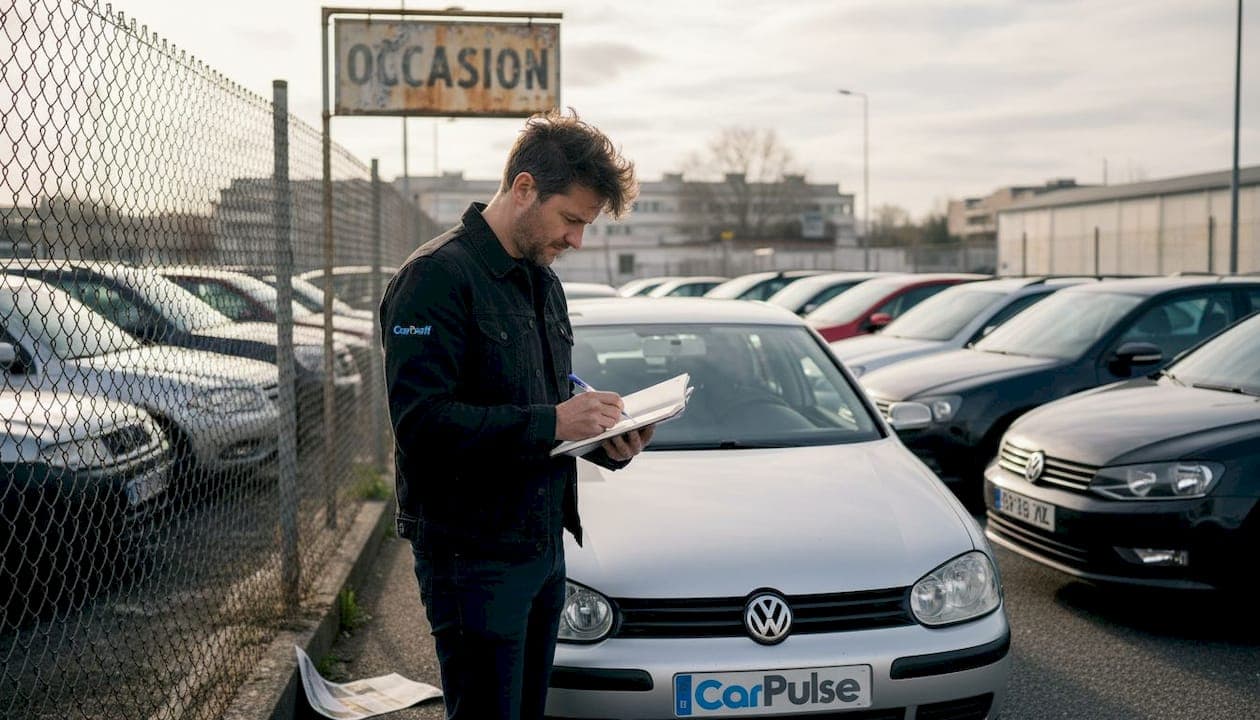
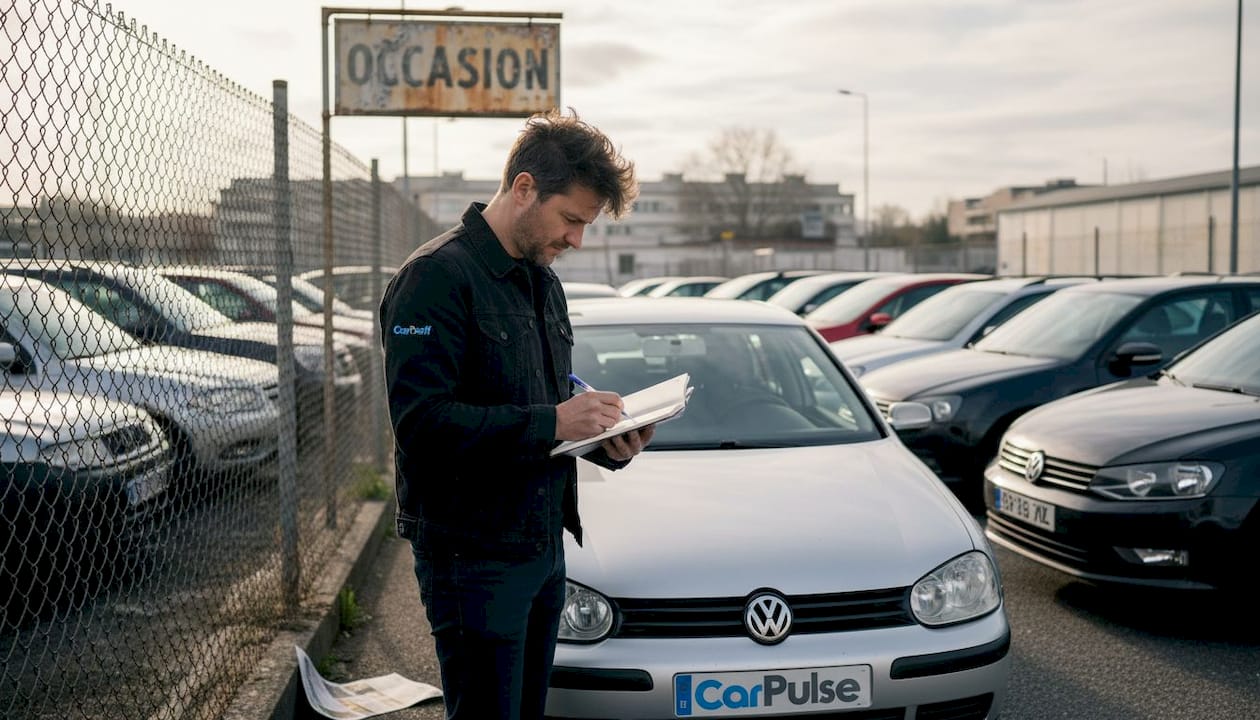
Before you even talk about the vehicle, assess who is selling it. Ask for a full name and, if it's a private seller, proof of identity; if it's a dealer, check the VAT number, a physical address and a consistent online presence (website, reviews, years in business). A video call in which the seller shows the car live, walks around it and reads the chassis number out loud is one of the most powerful checks and one of the hardest to fake. Be wary of anyone who refuses a video call, communicates only by chat, shows suspicious urgency, or writes in obviously machine-translated language. On a marketplace, check how long the profile has existed and whether its other listings are consistent.
The simplest way to skip most of these manual checks is to start from a platform that does them for you: on CarPulse every seller goes through verification, cutting the risk of ghost listings and cloned profiles at the root.
Vehicle history and VIN check
The chassis number (VIN, 17 characters) is the car's identity document and must always be checked. Compare the VIN on the documents, on the body (usually visible through the windscreen and on the door pillar) and on the chassis: they must match. With the VIN you can request a history report that tells you the declared mileage over time (to expose odometer tampering), recorded accidents, the number of previous owners, any liens or administrative holds, and the country of origin. "Clocked" mileage is one of the most widespread frauds in Eastern European markets: if the mileage declared today is lower than what a past inspection recorded, that's a red flag. Also confirm the car isn't reported stolen or carrying an unpaid loan in its country of origin.
Before you negotiate, check what that model is actually worth: CarPulse's AI valuation tool gives you an up-to-date European-market benchmark, so you immediately see whether an offer is fair or "too good to be true."
Inspection before final payment
Never pay the full amount without a physical check of the car. You have three options, in decreasing order of safety: go in person to collect and inspect it, send someone you trust, or commission an independent professional inspection service in the seller's country (there are companies that, for €100–250, send an expert to check the car and hand you a report with photos). An inspector checks the bodywork and any repaints, real wear versus mileage, engine and gearbox operation, error codes in the ECU, and document consistency. It costs money, but on a multi-thousand-euro purchase it's cheap insurance. If the seller objects to any form of inspection, consider the deal closed: an honest seller has nothing to hide.
Secure payments and risk management
Payment is where the risk concentrates. A few non-negotiable rules: never send large sums upfront to a seller you've never met; be suspicious of anyone asking for prepaid top-ups, cryptocurrencies or money-transfer services (irreversible and impossible to dispute); prefer payment on collection, when you have the car and the documents in front of you. A small deposit only makes sense after you've verified both seller and vehicle, and should always come with a written document. If you use an escrow service, make sure it's a real, recognised operator, not a site the seller themselves points you to. For cars under €10,000 — the most common bracket — the risk/saving ratio of a DIY import often doesn't add up: in that case, look at the already-verified offers on CarPulse.it, where the deal happens in a more protected environment.
Contract, documents and customs
A safe purchase always leaves a written trail. The sales contract must include full details of seller and buyer, the VIN, make, model, year, mileage, price, date and signatures; keep a copy. For an EU car you need the original ownership document and the COC (Certificate of Conformity), essential to avoid an individual inspection when re-registering in Italy. Within the European Union there are no customs duties: you only handle intra-Community VAT (22% if you buy from a dealer) and re-registration at the Motorizzazione/STA within 30 days of the vehicle entering Italy. For non-EU cars (Switzerland, the UK) duties and a customs procedure apply. Always transport the car on temporary plates from the country of origin or on a transporter — never on your Italian plates.
Buying safely with CarPulse
Most of the checks described — seller verification, price consistency, vehicle history — can be delegated to a platform built for the European market. CarPulse is a used-car marketplace connecting buyers and sellers across Italy, the Balkans and the rest of Europe, with a built-in layer of protection:
- Verified sellers — every advertiser is vetted, cutting ghost listings and cloned profiles at the root.
- AI price valuation — based on 24,000+ active listings: you instantly see whether a price is in line with the market or suspiciously low.
- Vehicle history — transparent information on mileage, previous owners and conformity.
- Free listings under €10,000 — the market's most popular bracket is free for sellers too.
- Cross-border reach — a single interface to compare offers from several countries without browsing sites in different languages.
Whether you want to buy safely or sell to reach European buyers, start from CarPulse.it. If instead you want to list your own car with international reach, create your listing in a few minutes.
Frequently asked questions
How do I tell whether an online car listing is a scam?
Typical signs are: a price far below the market, a request for a deposit to "hold" the car, an inability to see the vehicle live or on a video call, pressure to pay quickly, and requests for irreversible payments (money transfer, crypto, prepaid top-ups). Always compare the price with a market valuation and verify the seller and the VIN before sending any money.
Is it safe to pay a deposit for a car in another country?
Only after you've verified the seller's identity, the vehicle history and, ideally, after a physical inspection. A small deposit can be acceptable at that point, accompanied by a written document. Always avoid large upfront payments to sellers you've never met and irreversible payment methods: the safest option remains payment on collection.
Do I have to pay customs duties when buying a car online in Europe?
No, if you buy within the European Union: there are no customs duties. You will handle intra-Community VAT (22% if buying from a dealer) and re-registration in Italy within 30 days. From non-EU countries such as Switzerland or the UK, duties and an additional customs procedure apply.
Is it worth using a verified platform instead of buying from private sellers remotely?
Yes, it's the safest approach. A platform with verified sellers, price valuation and vehicle history removes most of the risks of cross-border buying. CarPulse, for example, aggregates offers from Italy, the Balkans and Europe into a single protected interface, reducing the need for manual checks on each individual seller.
Conclusion
Buying a car online cross-border safely isn't a matter of luck but of method: verify the seller, check the VIN and vehicle history, inspect before paying in full, and never send large sums upfront via irreversible methods. Every step you skip increases the risk. The simplest way to cut nearly all of this work is to start from a platform built for the European market: CarPulse.it gives you verified sellers, AI price valuation and vehicle history, turning a cross-border purchase into a smart choice rather than a gamble. Buy informed, pay safely, drive with peace of mind.