Guides
Buying Used Cars in Denmark: 2026 Guide
Buying Used Cars in Denmark: 2026 Guide
Summary:
- Denmark is in the EU: no customs duties, but VAT must be declared in Italy if the seller is a business.
- Danish used cars often cost less than equivalent Italian ones, thanks to Denmark's extremely high new-car registration tax.
- The process is manageable independently: inspection, purchase, transport (~1,600–2,200 km), COC document and registration at ACI.
The Danish car market hides genuine opportunities for buyers who know where to look. Denmark imposes on new vehicles a registration tax — the registreringsafgift — that can exceed 150% of the vehicle's value. The result? Cars depreciate sharply and the Danish used-car stock is full of well-maintained vehicles at competitive prices. On CarPulse.it, the pan-European marketplace for verified used cars, you can already find cross-border listings and compare prices across the EU before opening a single Danish website.
Why Buy a Car in Denmark
The financial logic is straightforward: when a new car costs more than twice as much because of the registreringsafgift, the worst of the depreciation hits the first owner. The foreign buyer steps into the Danish used-car market after that steep drop has already occurred.
Before the 2020 tax reforms the price gap was even wider; it has narrowed somewhat since then, but it remains significant across many segments — particularly mid-range saloons, compact SUVs and electric vehicles. Danish cars also benefit from disciplined maintenance: the mandatory periodic inspection (Syn), equivalent to the European roadworthiness test, ensures vehicles in circulation meet high technical standards.
Another advantage is straightforward: Denmark drives on the right, exactly like Italy. No steering-wheel adaptation, no conversion needed. Distances are manageable: from Milan to Copenhagen is roughly 1,700 km, achievable in two days of driving through Austria and Germany.
Where to Search for Danish Cars
The main Danish platforms are:
- Bilbasen.dk — Denmark's leading used-car portal, with tens of thousands of listings and advanced filters by make, year, mileage and fuel type.
- DBA.dk — a general-purpose classifieds site widely used for private car sales; prices are often lower, but seller verification is more limited.
- mobile.de — the large German aggregator indexes many Danish listings and can be browsed in multiple languages; useful for cross-border price comparisons.
In parallel, browse verified used-car listings on CarPulse.it: the platform aggregates listings from Italy, the Balkans and the rest of Europe, with AI price valuation across 24,000+ vehicles, vehicle history and verified sellers. Before contacting a Danish seller, benchmark the asking price against CarPulse market data to know whether you are getting a fair deal.
When browsing Danish portals, remember that most listings show prices in Danish krone (DKK). At the current rate 1 EUR ≈ 7.46 DKK (ECB reference rate — always check before negotiating).
Average Prices and Savings vs Italy
Prices vary by segment and model year, but here are indicative ranges for the Danish market in 2026:
- City cars and hatchbacks (VW Polo, Toyota Yaris, Ford Fiesta, 5–8 years old): between €5,000 and €11,000
- Mid-size saloons and estates (Passat, Octavia, Mazda 6, 3–7 years old): between €9,000 and €18,000
- Compact SUVs (Tiguan, Qashqai, Tucson, 3–6 years old): between €12,000 and €24,000
- Electric vehicles (Nissan Leaf, VW ID.3, Tesla Model 3): between €14,000 and €32,000 depending on range
The saving versus an equivalent Italian vehicle can range between 10% and 25% on certain models, but always subtract the import costs before drawing conclusions. Before committing, use the get a price estimate on CarPulse.it tool to see whether the asking price is genuinely competitive in the European market.
Import Process and Italian Registration
Buying a car in Denmark and re-registering it in Italy follows a clear sequence. Here are the steps in order:
- Agreement and payment — Negotiate the price, verify documents (see next section) and transfer payment. Private buyers typically use SEPA bank transfer; dealers also accept credit card or financing.
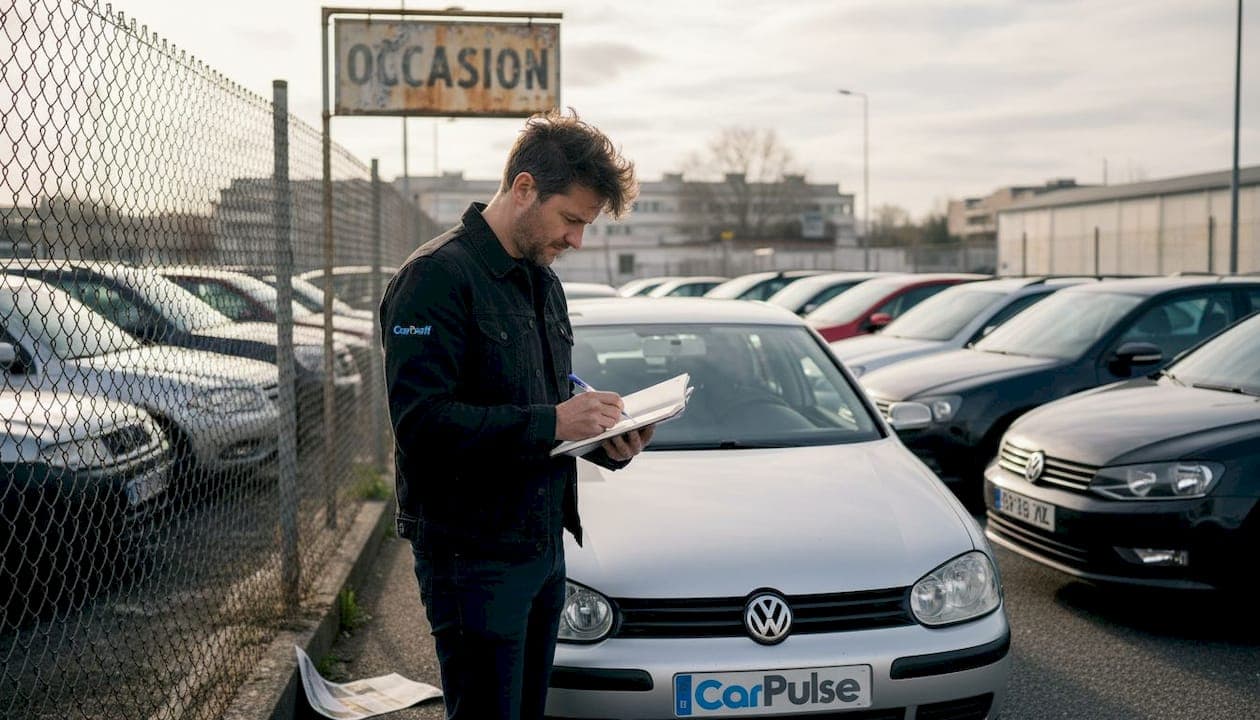
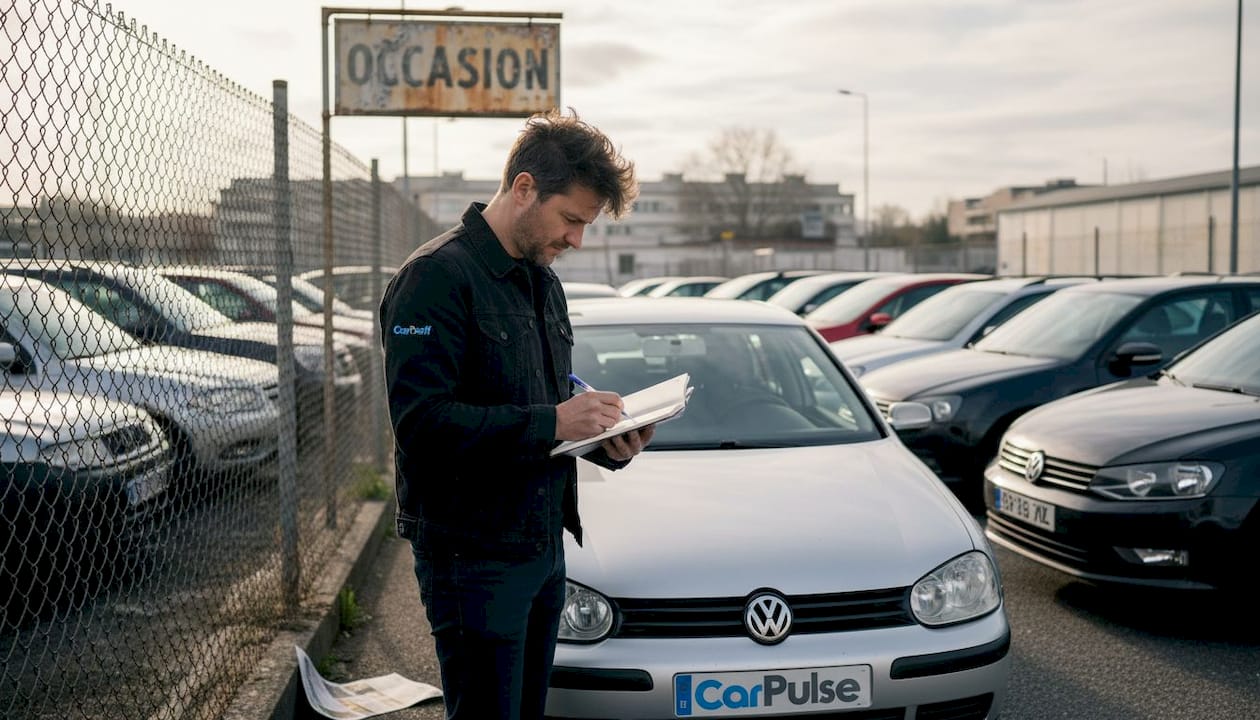
- Vehicle inspection — Before signing anything, have the vehicle inspected by an independent local mechanic or use a certified inspection service. Pay close attention to the bodywork and underbody (road-salt corrosion).
- Transport — You can drive the car to Italy yourself (legal with Danish plates and a purchase document) or hire a vehicle transport company. Professional transport Italy–Denmark typically costs between €300 and €800 depending on distance and service type.
- Intra-EU customs declaration — Denmark is an EU member, so there are no customs duties. If the seller is a VAT-registered business, the vehicle falls under the intra-community acquisition regime: VAT is not charged by the Danish seller but must be paid in Italy by the buyer (Italian VAT rate 22% on the vehicle value). If buying from a private individual, VAT does not apply to the purchase itself, but standard Italian registration taxes still apply.
- Roadworthiness test (if required) — If the vehicle does not have a roadworthiness certificate recognised in Italy, you may need to pass a test at a Motorizzazione Civile or authorised garage before registration.
- Registration at ACI/PRA — Submit the documents at a Sportello Telematico dell'Automobilista (STA) — available at ACI offices, authorised agencies or Motorizzazione. You will need: COC, purchase contract, certified translation if needed, form TT2119 (for foreign vehicles), identity document and Italian tax code (codice fiscale).
- IPT and ACI registration fees — The Imposta Provinciale di Trascrizione (IPT) varies between approximately €150 and €300 depending on province and engine size. ACI emoluments for PRA registration amount to around €32, plus stamp duties and agency fees if you use an intermediary.
Required Documents and Realistic Total Costs
Documents to obtain in Denmark:
- COC (Certificate of Conformity) — the European type-approval document is essential for Italian registration. If the seller does not have it, you can request it directly from the manufacturer (cost: €50–200 depending on the brand).
- Purchase contract (Slutseddel) — the sales agreement signed by both parties, including vehicle description, price and date.
- Danish vehicle register extract (Synsrapport + Køretøjsregistret record) — the equivalent of an ownership certificate and inspection history. Available online through official Danish portals; some Italian document agencies can obtain it on your behalf.
- Danish vehicle registration document — must be surrendered to Danish authorities when the vehicle is formally deregistered for export.
Realistic cost breakdown for a €12,000 car:
- Car price: €12,000
- Transport (professional carrier): €400–700
- COC (if missing): €50–150
- Intra-EU VAT (if buying from a business): ~€2,200 (22% of value)
- IPT + ACI registration fees: €180–330
- Document agency fees: €100–200
- Roadworthiness test (if required): €50–80
- Estimated total: €14,980–15,660 for a €12,000 car
The real saving materialises when the Danish price is significantly below the Italian equivalent — typically with higher-mileage vehicles in excellent mechanical condition, a category where the Danish market tends to excel.
Risks to Know and Final Checklist
Main risks:
- Road-salt rust — Danish roads are salted in winter. Always inspect the underbody, sills, wheel arches and boot floor. A lift inspection is non-negotiable.
- Odometer fraud — Even Denmark has documented cases of tampered mileage. Verify the reading against the official Danish vehicle registry and previous inspection stamps in the Synsrapport.
- Export bureaucracy — Deregistration from the Danish registry must happen before the vehicle permanently leaves the country. Ensure the seller completes this step and provides written confirmation.
- Incomplete documents — A missing COC can stall Italian registration for weeks. Obtain it before transporting the vehicle.
- Exchange rate — The Danish krone (DKK) is pegged to the euro with minimal fluctuation, but always confirm the live rate on the day of payment.
Pre-purchase checklist:
- ☐ Mechanical inspection by independent garage (on a lift)
- ☐ Inspection history verified (Synsrapport)
- ☐ Mileage checked against official registry
- ☐ COC available or requested from the manufacturer
- ☐ Purchase contract in order (Slutseddel)
- ☐ Danish deregistration confirmed by seller
- ☐ Transport quote obtained or self-drive itinerary planned
- ☐ Intra-EU VAT calculated (if seller is a business)
- ☐ STA/ACI appointment booked for on arrival
Why Use CarPulse for Cross-Border Purchases
CarPulse is the pan-European marketplace built for buyers who want to purchase verified vehicles across borders without surprises. With over 24,000 listings, integrated vehicle history, AI-driven market price valuation and verified sellers, CarPulse streamlines the research and comparison phase that would otherwise require hours of navigating foreign portals.
You can browse verified listings on CarPulse.it filtered directly by specification, price and geographic area. If you have already spotted a car in Denmark and want to know whether the price stacks up, use the get a price estimate on CarPulse.it tool for a valuation grounded in real European market data. Free listings are available for vehicles under €10,000 — post your current car on CarPulse.it if you plan to sell before or after the import.
FAQ
Do I have to pay customs duties when importing a car from Denmark?
No. Denmark is a European Union member state, so no customs duties apply when importing into Italy. The applicable fiscal framework is the intra-community acquisition regime: if the seller is a VAT-registered business, VAT is not charged in Denmark but must be paid in Italy by the buyer (Italian rate 22% on the vehicle value). If you are buying from a private individual, VAT is not an issue on the purchase side, though standard Italian registration taxes remain payable.
How much does transport from Denmark to Italy cost?
Professional transport on a car carrier typically costs between €300 and €800 for the Denmark–Italy route, depending on exact distance, service type (open vs enclosed trailer) and season. Alternatively, you can drive the car back yourself — this is perfectly legal on Danish plates with your purchase documentation — saving the carrier fee but incurring fuel costs, motorway tolls and at least one overnight stay.
Is the Certificate of Conformity (COC) always required?
For the Italian registration of a foreign vehicle, the COC is in practice almost always required — it dramatically simplifies the process at the Motorizzazione Civile. Without an original COC, a technical appraisal by the Motorizzazione is possible but significantly slower. It is strongly advisable to obtain the COC from the manufacturer before finalising the purchase.
Are Danish cars more prone to rust than Italian ones?
The risk is real but manageable. Denmark salts its roads in winter, which accelerates underbody corrosion on vehicles that have not been properly treated. However, Danish cars must pass periodic roadworthiness tests (Syn) that include structural checks, so vehicles with serious issues are flagged before they can be resold. A professional lift inspection remains non-negotiable before any purchase.
Conclusion
Buying a used car in Denmark is a concrete and potentially advantageous option for the Italian buyer, provided you do the maths correctly and do not skip the technical and documentary due diligence. The Danish market offers well-maintained vehicles, often priced below Italian equivalents, with the added benefit of no customs friction and no right-hand-drive conversion to worry about. The bureaucratic path to Italian registration is well-defined and repeatable, especially with the support of an experienced document agency. Start your search on CarPulse.it to compare European prices and find the right car before booking your trip north.