Guides
Inspecting a Used Car Abroad: Step-by-Step Guide
Inspecting a Used Car Abroad: Step-by-Step Guide
Summary:
- Before physically viewing the car, always verify the documents: title of ownership, service history, vehicle history report, and absence of financial encumbrances.
- The physical inspection must cover bodywork, chassis, engine, interior and tyres; a test drive is non-negotiable and must include braking, steering and gearbox.
- For cross-border purchases — especially from private sellers — hiring an independent certified inspector costs between €100 and €300 and can save you far more.
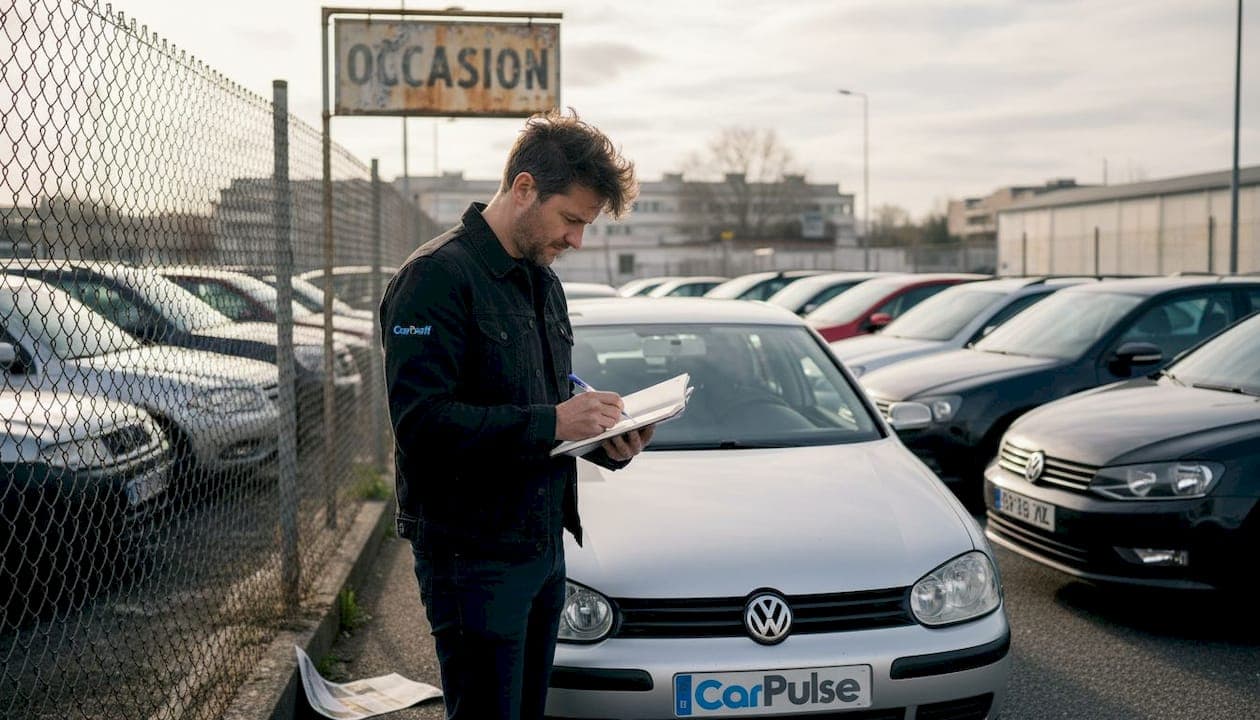
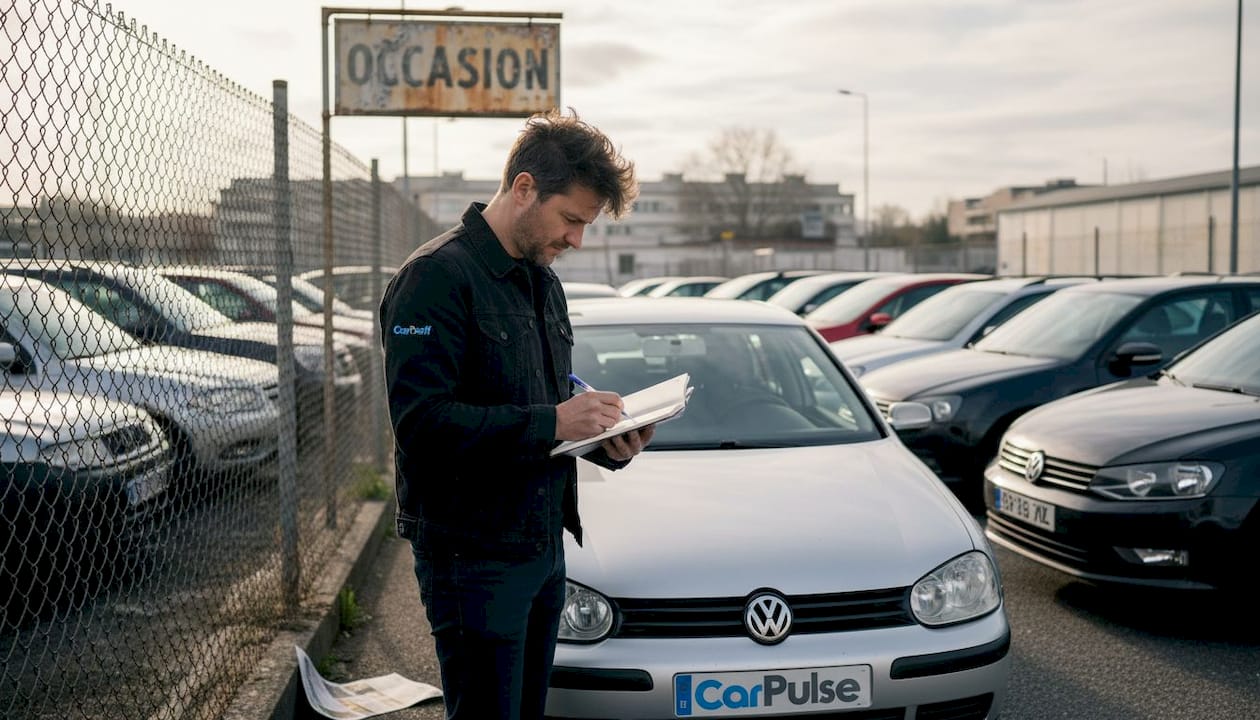
Buying a used car abroad can save you thousands of euros compared to your home market, but only if you know exactly what to check before signing any contract. A cursory inspection — or worse, none at all — frequently turns a seemingly great deal into an expensive money pit. On CarPulse, a European marketplace with over 24,000 verified listings from Italy, the Balkans and the wider EU, every vehicle card includes technical data, high-resolution photos and a verified seller badge — a solid starting point, but not a substitute for direct inspection. This guide walks you through every step — from documents to request before you travel, to the final checklist you fill out on-site.
Why You Need to Inspect a Used Car Before Buying Abroad
The cross-border used car market is thriving and legitimate, but it carries specific risks that simply don't exist when you buy locally. When you buy at home, you can make multiple visits, bring a trusted mechanic, and easily consult a nearby garage. When you're abroad — in Germany, Austria, Romania or the Balkans — your margin for error is essentially zero: once you sign and pay, reversing the transaction is complicated and expensive.
The most common problems that emerge after purchasing an imported car without proper inspection include:
- Clocked odometers: odometer fraud remains widespread in several countries, even within the EU.
- Undisclosed accident damage, often concealed with touch-up paint or body filler.
- Cars with financial encumbrances: the vehicle is still under a bank guarantee or finance agreement, and the seller has no legal right to transfer it.
- Latent mechanical problems: a worn clutch, failing automatic gearbox, whining turbo — defects that only surface after a few hundred kilometres.
- Altered or cloned VINs: stolen vehicles re-plated with forged identities — rare, but not unheard of.
A proper pre-purchase inspection won't eliminate every risk, but it dramatically reduces the probability of encountering these scenarios.
Documents to Verify Before Viewing the Vehicle
Even before you book a flight or get in the car, ask the seller for digital copies of the following documents. If they refuse without a reasonable explanation, treat that refusal as a red flag in itself.
Title of Ownership and Registration History
Every country has its own equivalent of a vehicle registration document. Verify that the seller's name matches the registered owner. If the car has had many owners in a short period, investigate the reason.
Service Book / Maintenance History
A service booklet with original stamps from authorised workshops is a guarantee of traceable maintenance. Check that the recorded mileages show a logical progression and that the dates are consistent with the vehicle's age.
Vehicle History Report
Services such as CarFax (North American market), AutoDNA, carVertical or the European EUCARIS system allow you to trace a vehicle's accident history, registration records, technical inspections and theft reports. The cost is typically €15–30 and can be the best investment in the entire transaction.
Absence of Financial Encumbrances
In many European countries — particularly in Central and Eastern Europe — vehicles purchased on finance remain under bank guarantee until the loan is fully repaid. National registers of movable pledges exist to verify this. In Germany the relevant service is the ADAC Fahrzeughistorie; Romania has the Arhiva Electronică de Garanții Reale Mobiliare. Always confirm the vehicle is free of liens before proceeding.
Current Technical Inspection Certificate
Periodic technical inspections (the equivalent of the UK MOT or Italian revisione) are mandatory across the EU, though procedures vary by country. A recently passed inspection is a positive sign, but does not replace a private pre-purchase inspection.
Physical Inspection: What to Check On-Site
You've arrived at the seller — whether a German dealership, a private individual in Slovakia or a reseller in the Balkans. Here are the areas to examine systematically, ideally in daylight and with good natural light.
External Bodywork
Walk slowly around the entire perimeter of the vehicle, crouching periodically to observe the side profile. Look for:
- Differences in paint tone or texture between adjacent panels (a sign of localised repainting).
- Micro-bubbles or paint crazing, often a sign of underlying oxidation or poorly applied filler.
- Panels that don't line up perfectly: uneven gaps between doors, bonnet and bumpers frequently betray post-accident repairs.
- Active corrosion on wheel arches, under sills and at chassis joint points.
If you have a paint thickness gauge (a pocket tool costing €20–50), use it: a reading above 200–250 microns on any panel almost certainly indicates repainting after bodywork damage.
Chassis and Undercarriage
Get down and look at the underside. Look for irregular welds, folded or kinked metal, or non-factory weld beads used in repairs. The floor pan should be uniform. If the seller refuses to allow undercarriage inspection — even with a trolley jack or inspection pit — consider that an unacceptable refusal.
Engine Bay
- Check the level and colour of engine oil, coolant and brake fluid.
- Look for signs of leaks: oily patches beneath the engine, whitish deposits around the oil filler cap (possible coolant contamination from a head gasket failure).
- Verify that the VIN stamped on the engine block matches the VIN on the documents and dashboard.
- Watch for improvised wiring, makeshift electrical repairs or non-original components.
Interior
The interior tells you a lot about the vehicle's true history. Heavily worn carpets and a low odometer reading are a contradiction. Also check: wear on the steering wheel and gear lever, functioning of all electric controls (windows, mirrors, adjustable seats, air conditioning) and any signs of dampness or mould smell indicating water ingress.
Test Drive and Mechanical Check
A static inspection is necessary but insufficient. Always insist on a test drive of at least 15–20 minutes on mixed roads: urban stretch, a brief motorway run if possible, and a reversing manoeuvre.
During the drive, pay attention to:
- Braking: the car must stop straight, without pedal vibration and without pulling to one side. Vibrations indicate warped discs.
- Steering: no excessive play, no noise on tight turns (likely CV joint failure).
- Manual gearbox: gears must engage cleanly and precisely; grinding or difficulty selecting a gear indicates clutch or synchromesh wear.
- Automatic / CVT / dual-clutch gearbox: verify smooth gear changes, no lurching or hesitation, especially during cold starts.
- Engine: no exhaust smoke when warm (blue smoke = burning oil; persistent white smoke when warm = coolant entering the combustion chamber).
- Suspension: deliberately drive over a speed bump or pothole; clunking or squeaking noises point to worn shock absorbers, bushings or anti-roll bar links.
After returning, check that the engine malfunction indicator (MIL) has not illuminated. Better still, ask to plug in an OBD-II scanner to read stored fault codes — including recently cleared codes that some advanced tools can detect.
Hiring a Professional Inspector or Appraiser
For purchases above €5,000–6,000, or when you're not fully confident in your own technical assessment, hiring an independent appraiser is the smartest move you can make.
Across Europe, specialist services exist for pre-purchase inspections carried out on a third party's behalf:
- ADAC Fahrzeugbewertung (Germany): the German motoring association offers independent appraisals with detailed written reports. Approximate cost: €150–250.
- RAC Vehicle Inspections / AA Car Inspections (UK, Ireland): well-established services for the British and Irish market.
- Dekra / TÜV SÜD / TÜV Rheinland: certification bodies present across Europe, often available for private inspections by appointment. Cost: €100–300 depending on the country and depth of inspection.
- Independent local appraisers: in the Balkans and Eastern Europe, nationally certified technicians are available at lower cost (€50–120). Always verify the appraiser has no conflict of interest with the seller.
The appraiser produces a written report — typically with detailed photographs — describing the vehicle's condition and estimating the cost of any required repairs. This document is invaluable during price negotiation and can prevent you from making a purchase that looks attractive on the surface but isn't.
If you're evaluating vehicles listed on CarPulse's European listings, you can use the AI price valuation tool as a preliminary reference before engaging an inspector in the field.
Buying from a Distance: Remote Inspection and Video Inspection
It's not always practical or economical to travel to the vehicle before buying, particularly when distances exceed 500 km. In these cases, alternatives exist that — while not replacing a physical inspection — substantially reduce the risk.
Live Video Inspection from the Seller
Ask the seller to conduct a live video session (WhatsApp, FaceTime, Google Meet) showing the car in motion: cold start, an exterior walkround with the camera close to panels and the underside, and a live acceleration run. An honest seller accepts without hesitation. Anyone who refuses or sets conditions has something to hide.
Third-Party Remote Inspection Services
Several European platforms send a physical inspector to the seller's location on your behalf, produce a report and deliver it within 24–48 hours. Cost typically ranges from €100 to €200. This approach is especially popular for purchases from the UK, Germany and the Netherlands — markets with abundant supply and competitive pricing relative to many other European countries.
Buying Completely Unseen: When to Avoid It
Categorically avoid purchasing with no inspection whatsoever — neither direct nor delegated — for vehicles with more than 100,000 km, more than 8 years of age, or without a verifiable service book. The apparent savings are almost always wiped out by the first workshop visit.
Complete Pre-Purchase Checklist
Use this list as your reference before finalising any purchase. Print it or save it on your phone.
Documents (verify remotely, before travelling)
- Title of ownership in the seller's name ✓
- VIN history report (carVertical / AutoDNA / EUCARIS) ✓
- Service book with original workshop stamps ✓
- No financial encumbrances on the vehicle ✓
- Valid technical inspection certificate ✓
- COC (Certificate of Conformity) available ✓
External inspection
- Uniform paint across all panels ✓
- No dents, deep scratches or active rust ✓
- Even panel gaps: doors, bonnet and bumpers aligned ✓
- Paint thickness gauge reading (max 200 µm) ✓
- Tyres: even tread wear, no sidewall bulging ✓
Engine bay
- VIN on engine block matches documents ✓
- No oil or coolant leaks ✓
- All fluid levels within normal range ✓
- No improvised wiring or non-original components ✓
Interior
- Interior wear consistent with declared mileage ✓
- All electric controls working ✓
- No damp or burning smells ✓
- Infotainment screen / navigation working ✓
Test drive
- Straight, progressive braking with no vibration ✓
- Precise steering, no noise on corners ✓
- Smooth gear changes, no grinding or hesitation ✓
- No exhaust smoke when at operating temperature ✓
- No warning lights after the drive ✓
- OBD-II scan: zero active or recently cleared fault codes ✓
Frequently Asked Questions
How much does a professional pre-purchase inspection cost in Europe?
It depends on the country and the organisation. In Germany, ADAC and TÜV charge between €150 and €250. In Eastern Europe and the Balkans, locally certified appraisers typically charge €50–120. Remote third-party inspection services (with written report and photos) generally cost €100–200 regardless of geographic location. Always treat this cost as an integral part of the purchase price.
Can I trust the service book if it's not in my language?
Yes, provided you verify its authenticity. Official dealer stamps are easily cross-checked online or by calling the brand's network directly. Always photograph the key pages and ask the manufacturer's official network to confirm. Dates, mileages and stamps speak for themselves — no certified translator needed.
Is a carVertical or AutoDNA report reliable for Balkan countries?
Database coverage varies by country. carVertical has good coverage for Romania, Bulgaria and Serbia, but may be incomplete for Albania, Kosovo or North Macedonia. In those cases, the physical inspection and paper service book carry the most weight. A reputable local appraiser is often the only concrete safeguard available.
If I find defects after purchase, do I have legal recourse?
It depends on the type of seller. If you bought from a professional dealer within the EU, Directive 2019/771 guarantees you a two-year statutory warranty even on used vehicles (member states can reduce this to one year for vehicles over three years old). If you bought from a private individual, your protections are far more limited and depend on the civil law of the country where the transaction took place. Carefully documenting the vehicle's condition at the time of purchase — with photos, video and ideally an appraiser's report — is your best protection should a dispute arise.
Conclusion
A thorough pre-purchase inspection is not an optional extra: it's the essential filter that separates genuine opportunities from well-packaged traps. Request documents before you travel, examine the vehicle methodically, take the test drive without rushing, and when the numbers justify it, hire an independent inspector. If you're exploring the European used car market, start with a search on CarPulse — over 24,000 vehicles with detailed listings, verified sellers and the ability to get a free AI market value estimate before you even contact the seller. Buying well means knowing what you're buying.