Guides
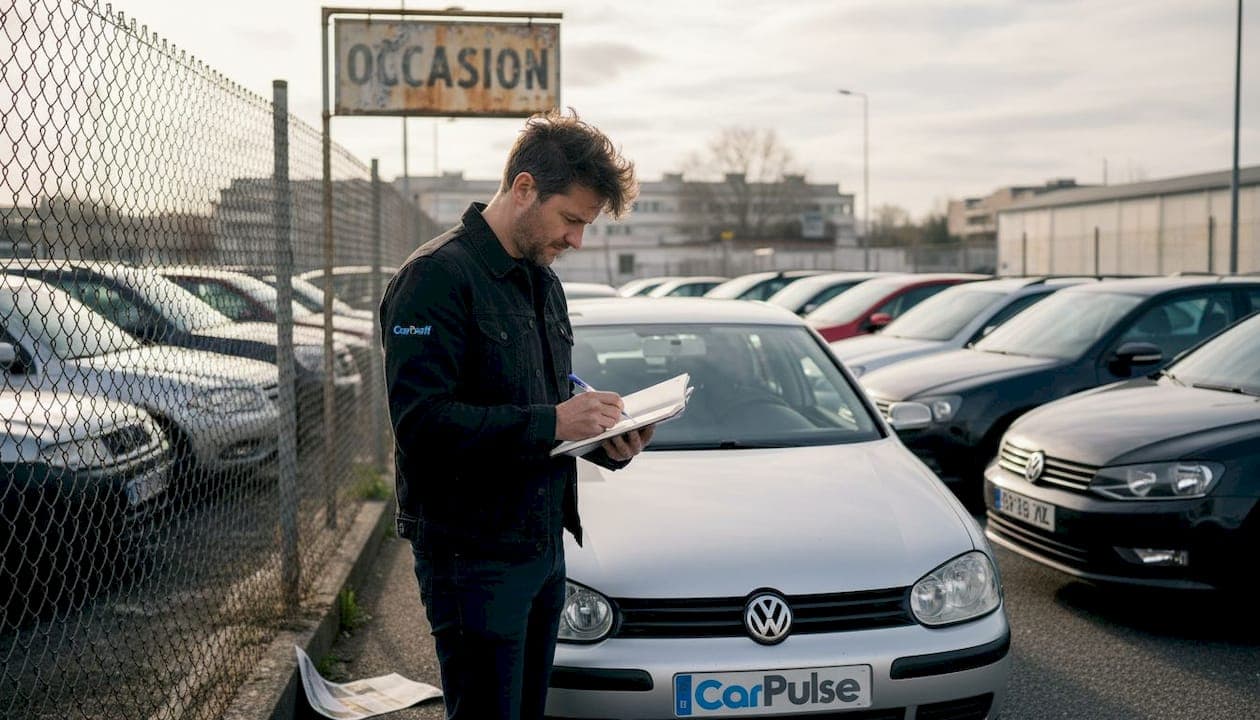
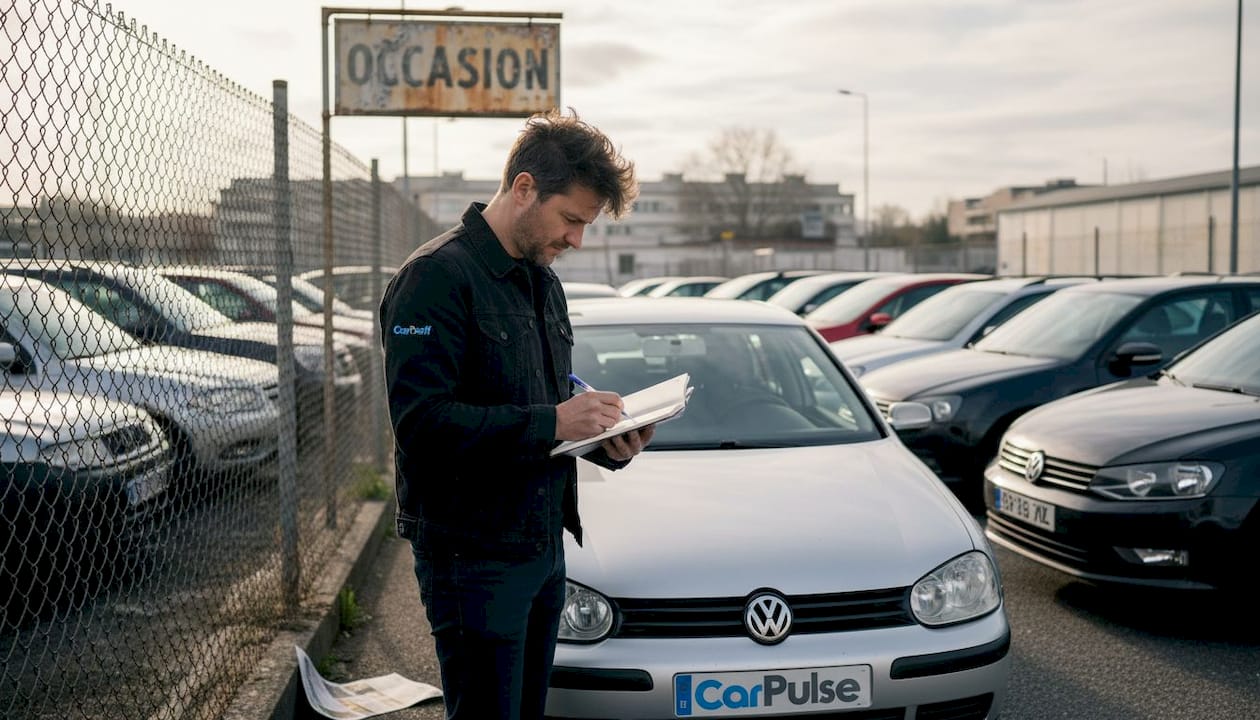
How to verify a foreign car before buying
How to verify a foreign car before buying
Summary:
- Always run a VIN history check before buying any foreign used car — it surfaces odometer manipulation, accident history, previous owners and active financial encumbrances.
- Request all original documents (title, COC, service history) and cross-reference them against the VIN before travelling to inspect the vehicle.
- A physical inspection by an independent mechanic and awareness of common red flags can save you from a purchase that turns into an expensive disaster.
Buying a used car from Germany, Italy, the Balkans or elsewhere in Europe often means better prices than the domestic market offers. But the opportunity comes bundled with risk: manipulated mileage, forged documents, undisclosed liens and hidden mechanical defects. Platforms like CarPulse — a European used-car marketplace with over 24,000 verified listings from Italy, the Balkans and the wider EU — help you pre-filter trustworthy sellers, but every buyer still needs to know what to look for before signing anything.
This guide walks you through every stage of the process: from what you can do online before you travel, to the physical inspection and final legal checks.
Why verification is non-negotiable
When you buy locally you can inspect the car in minutes and, if something goes wrong, your legal recourse is relatively straightforward. A cross-border purchase changes the equation on several fronts:
- Odometer fraud: according to Carfax Europe, over 30% of cars sold cross-border in Europe have mileage inconsistencies. Digital odometers can be reset with tools costing a few dozen euros.
- Different technical standards: a car registered outside the EU (Serbia, Albania, pre-agreement Switzerland) may not meet current Euro emissions or safety standards and may require costly modifications for Italian homologation.
- Liens and encumbrances: in many countries a car can be sold even if it carries an active loan or a legal seizure order. Without a specific check you won't find out until the bill arrives.
- Fraudulent documents: title certificates, service records and Certificates of Conformity (COC) can all be forged or altered, particularly in markets with low administrative digitalisation.
VIN check and vehicle history
The VIN (Vehicle Identification Number) is the unique 17-character code that identifies every vehicle worldwide. It is physically stamped on the engine bay and on the dashboard near the windscreen (driver's side), and printed on all official documents. Before anything else, confirm that the VIN:
- Matches exactly across all documents and both physical locations on the car.
- Is not tampered with — digits should be uniformly stamped, with no signs of welding, paint over-spray or removal.
- Does not contain the letters I, O or Q — the VIN standard excludes these to prevent confusion with the numerals 1, 0 and 0.
With the VIN in hand, run the following checks:
- Carfax Europe or AutoDNA: comprehensive reports covering accident history, service events, mileage changes across participating countries, previous owners and, for some markets, active financing. Cost is typically €20–50 per report.
- National databases of the country of origin: many EU countries offer free or low-cost checks — France's Histovec portal, for example, provides free administrative history directly from the Ministry of the Interior's archive.
- ACI (Automobile Club d'Italia): if the vehicle was previously registered in Italy, ACI allows you to check for administrative holds, mortgages and liens.
Document verification
Documents to request and review before any payment:
- Title / registration certificate: must show the seller's name, the exact VIN and match the vehicle's technical specifications. Request a front-and-back copy in advance and cross-check it against the databases.
- Certificate of Conformity (COC): a manufacturer-issued document certifying EU compliance. Essential for straightforward registration in Italy without the more expensive individual homologation procedure.
- Service history booklet: ideally complete with stamps from authorised service centres. Compare service dates and mileages against the VIN report — discrepancies are immediately visible.
- Repair invoices: document the work performed and attest to the vehicle's real mechanical history. Any honest seller keeps these.
Remote pre-screening: what to do before you travel
If the car is in another country, travelling for a purchase that falls through wastes time and money. Here is how to reduce that risk up front:
- Request high-resolution photos of every body panel, the engine bay, the interior and the physical VIN. Photos should be fresh — ask for a handwritten note with the date visible in the frame.
- Live video call: ask the seller to walk you through the car on a video call, start the engine and show the instrument cluster. A genuine seller has no objection to this.
- Check the seller's profile on the platform: on CarPulse every listing includes the seller's profile with ratings and verification badges. A zero-review seller who posted the listing 24 hours ago deserves extra scrutiny.
- Get the VIN in advance and run the report before any appointment — if the report is already problematic, you save the trip.
Physical mechanical inspection
Once you are standing in front of the vehicle, the mechanical inspection is the step you cannot delegate to photos or reports. If you are not a professional mechanic, invest €80–150 in an inspection by an independent technician — it is the single best spend in this entire process.
- Bodywork and frame: look for tone differences between adjacent panels (sign of post-accident repainting), imperfections at door edges, rust bubbles under sill trim. A paint-thickness gauge (available cheaply online) can reveal hidden repairs.
- Engine bay: check for fluid seepage at gaskets, hoses and couplings; inspect oil colour and level, and coolant colour. Milky or emulsified oil is a serious head-gasket warning sign.
- Underbody: on a lift, check the condition of shock absorbers, control arms, anti-roll bar and steering rack. Excessive rust or impact marks on the floorpan can indicate undisclosed accidents.
- Tyres: check wear — uneven wear patterns indicate alignment or suspension problems.
- Test drive: at least 15–20 minutes on varied roads. Listen for abnormal noises under braking, lane changes and acceleration; test all ADAS systems.
- OBD diagnostics: an OBD-II code reader (€20–30 online) reveals fault codes stored in the ECU, even if they were cleared before the sale.
Legal and financial checks
Even a mechanically sound car with clean documents can hide legal or financial issues that make the purchase risky or void:
- Stolen vehicle check: cross-reference the VIN against Interpol databases (available via some paid reports) and the national register of the country of origin.
- Active financing: in many countries (UK, Romania, Serbia) a car sale does not automatically extinguish the seller's debt. The lender retains rights over the vehicle. Verify via the VIN report or the country's lien register.
- Outstanding fines and taxes: in some countries unpaid penalties follow the vehicle, not the owner. Ask the seller for an official extract of fiscal liabilities against the VIN.
- Fair price check: before closing the deal, use the CarPulse AI valuation tool, which benchmarks the asking price against comparable vehicles across 24,000+ European listings and gives you an objective negotiation reference.
Red flags: when to walk away
Some situations should make you leave the table regardless of how attractive the car appears:
- Price that is too good to be true: if the car is priced significantly below market without a documented explanation, something is wrong. Nobody gives money away.
- Refusal to provide the VIN in advance: a seller who will not share the VIN before the meeting has something to hide.
- Time pressure: "there is another buyer coming", "this offer is only valid today" — classic tactics to push you to decide before you can verify.
- Missing or gappy service history: a car with 150,000 km and no documented service in the last 50,000 km is a mechanical unknown.
- VIN mismatch between documents and vehicle: the gravest possible signal. Stop immediately and, if you suspect fraud, report it to the authorities.
- Refusal to allow third-party mechanical inspection: any honest seller accepts this without issue.
If you want cross-border car buying with built-in transparency, CarPulse allows sellers to upload verified documentation directly to their listing — reducing the number of red flags you need to handle from the very start.
FAQ
Can I do a free VIN check on a foreign car?
Yes, partially. Services like France's Histovec offer free reports for French-registered vehicles. For cars from other European or Balkan countries, full reports from Carfax Europe or AutoDNA cost €20–50 — a negligible sum relative to the vehicle's value and the cost of a bad purchase.
What happens if I buy a car with an undisclosed active loan?
In many countries the lender retains rights over the vehicle even after the sale. In practice this can mean seizure of the car — and your only recourse would be legal action against the seller, which is considerably more complex if they are in another country. Verifying active financing via a VIN report is essential before any cross-border purchase.
Is the COC mandatory to register a foreign car in Italy?
For vehicles from EU countries, the COC is not strictly mandatory, but it greatly simplifies the registration process at the Motorizzazione Civile. Without it you need an individual homologation procedure, which is more expensive and time-consuming. For cars from non-EU countries the situation is more complex and depends on the vehicle's type approval status.
How much does an independent pre-purchase mechanical inspection cost?
An independent mechanic's inspection typically costs €80–150, varying by vehicle complexity. Some authorised garages offer structured "pre-purchase check" packages that include OBD diagnostics, underbody inspection and a test drive. It is the highest-ROI spend in the entire buying process.
Conclusion
Buying a foreign car is not inherently risky — buying one without systematic verification is. The process described in this guide takes a few hours and costs around €100–200 in VIN reports and a mechanical inspection: a tiny sum relative to any car's value and the potential cost of getting it wrong. Start with the VIN check, verify the documents, have the car inspected by a trusted mechanic, and never ignore red flags. Platforms like CarPulse — with verified sellers, AI price valuation and cross-border listings from over 24,000 vehicles — are the ideal starting point for reducing risk before your verification even begins.